
Introduction
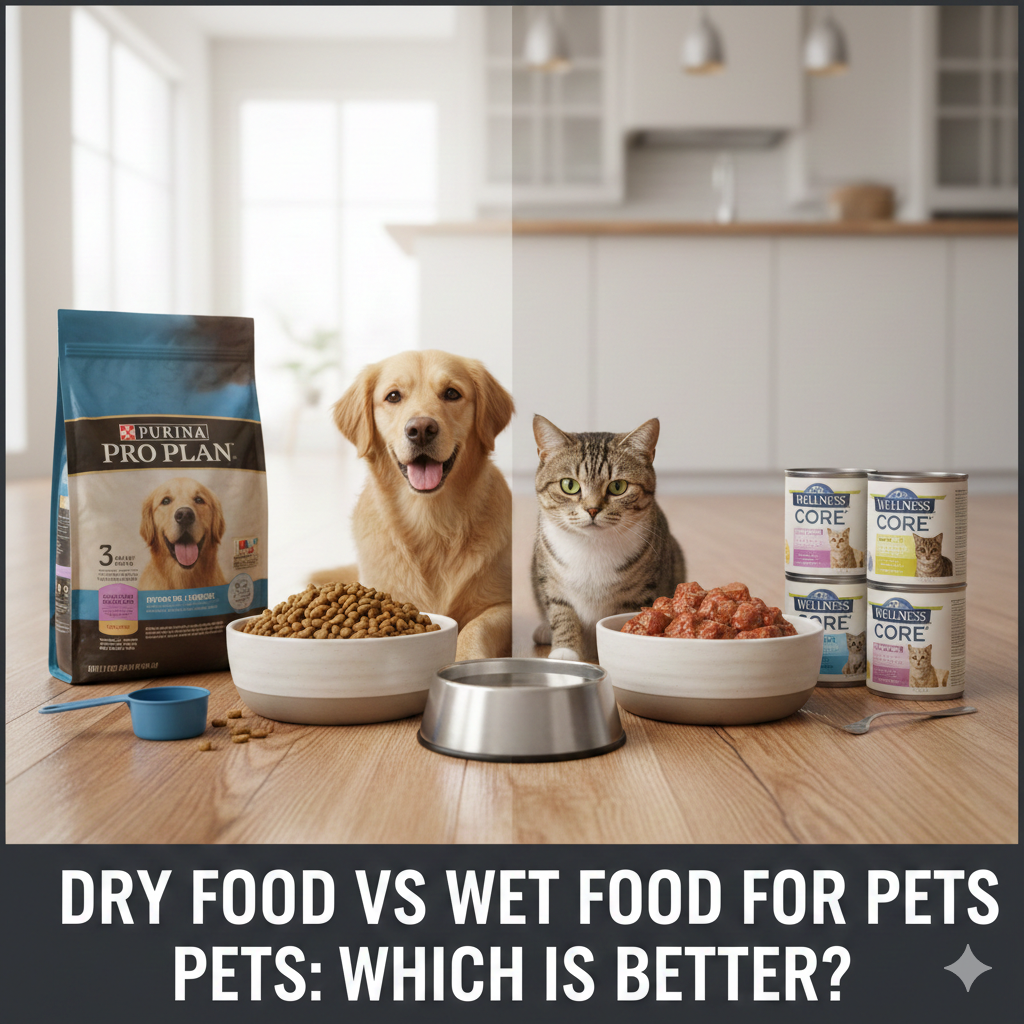
Dry vs wet pet food are both safe options for pets, but neither is universally better. The right choice depends on hydration needs, digestion, dental health, age, and daily routine. Problems arise when owners follow rigid opinions instead of matching food type to their pet’s real needs.
After these adjustments, your content will be fully optimized for SEO without losing readability.
If you want, I can rewrite your entire introduction and key sections right now with the focus keyword fully integrated so it’s Rank Math–ready.
Online advice often frames this as a battle—kibble versus canned food—without explaining context. In practice, many healthy pets eat one or a combination of both. This guide breaks down the true differences between dry and wet food, explains when each works best, highlights common feeding mistakes, and helps you make a confident decision without overthinking nutrition.
Understanding the Core Difference (Beyond Texture)
At a basic level, the biggest difference is moisture content.
Dry food: low moisture, concentrated calories
Wet food: high moisture, lower calorie density
But nutrition isn’t just about water. Processing, portion control, storage, and feeding behavior all change how each type affects health.
[Pro-Tip]
Think of food type as a delivery system, not a quality label.
Dry Food: Benefits and Limitations
Why Many Owners Choose Dry Food
Convenient storage
Longer shelf life
Easier portion measurement
Where Dry Food Falls Short
Low hydration support
Easy to overfeed
Not ideal for pets with dental pain or low thirst
From real feeding situations, pets on dry-only diets sometimes drink less water than expected, especially older or less active animals.
Wet Food: Benefits and Limitations
Why Wet Food Helps Certain Pets
Increases hydration naturally
Easier to chew and digest
Often more appealing to picky eaters
Where Wet Food Needs Caution
Spoils quickly after opening
More expensive long-term
Can encourage overeating if portions aren’t controlled
[Expert Warning]
Wet food is not automatically “healthier” if portions aren’t adjusted correctly.
Side-by-Side Comparison Table
| Factor | Dry Food | Wet Food |
| Moisture | Low | High |
| Portion control | Easier | Requires care |
| Dental impact | May reduce plaque | No dental benefit |
| Hydration support | Minimal | Strong |
| Cost over time | Lower | Higher |
| Convenience | High | Moderate |
Which Pets Benefit More From Each?
Dry Food Often Works Well For:
Young, active pets
Pets with healthy teeth
Owners needing feeding consistency
Wet Food Often Works Better For:
Senior pets
Pets prone to dehydration
Animals with dental sensitivity
Picky eaters
Internal linking suggestion:
Link to Best Diet for Pets: What Actually Matters
Anchor: “choosing a balanced pet diet”
Common Feeding Mistakes (and Smarter Fixes)
Mistake 1: Overfeeding Dry Food
Because it’s calorie-dense, small excesses add up.
Fix:
Measure portions accurately and reassess monthly.
Mistake 2: Free-Feeding Wet Food
Leaving wet food out encourages spoilage and overeating.
Fix:
Serve measured meals and remove leftovers.
Mistake 3: Switching Too Often
Frequent switching disrupts digestion.
Fix:
Transition slowly over 7–10 days.
Information Gain: Mixed Feeding Is Often Overlooked
SERP Gap Identified:
Most top-ranking pages force an “either-or” decision.
In real-world practice, mixed feeding (dry + wet) often works best:
Dry food for structure and dental benefit
Wet food for hydration and palatability
This approach balances benefits without extremes, especially for pets with changing needs.
[Money-Saving Recommendation]
Using small amounts of wet food alongside dry can improve hydration without doubling food costs.
UNIQUE SECTION: Beginner Mistake Most People Make
Mistake: Choosing food based on opinion, not observation.
Many owners switch food types because of online debates rather than watching how their pet responds—energy, stool quality, coat condition, and appetite matter more than ideology.
Your pet’s response is better feedback than any label.
Practical Feeding Framework (Simple & Flexible)
| Question | What to Observe |
| Is my pet drinking enough? | Consider adding wet food |
| Is weight increasing? | Reduce portions, not quality |
| Is appetite inconsistent? | Improve routine consistency |
| Is digestion unstable? | Avoid frequent switching |
FAQs
Is wet food better than dry food for pets?
Not always. It depends on hydration, age, and health needs.
Can pets eat both dry and wet food?
Yes. Many pets benefit from a balanced combination.
Does dry food clean teeth?
It may help reduce plaque, but it doesn’t replace dental care.
Is wet food bad for teeth?
No, but it doesn’t provide dental benefits either.
How do I switch food types safely?
Transition gradually over at least a week.
Which food is better for senior pets?
Wet or mixed feeding often works better due to hydration and ease of chewing.
Conclusion:
Dry food vs wet food isn’t a debate to “win.” It’s a decision to tailor. By understanding how each type affects hydration, digestion, and feeding behavior, you can choose what truly supports your pet’s health. Many pets thrive on a thoughtful combination—proof that balance usually beats extremes.
Internal link
Best Diet for Pets: What Actually Matters Most
External link
https://quartzmountainanimalhospital.com/


