
Introduction
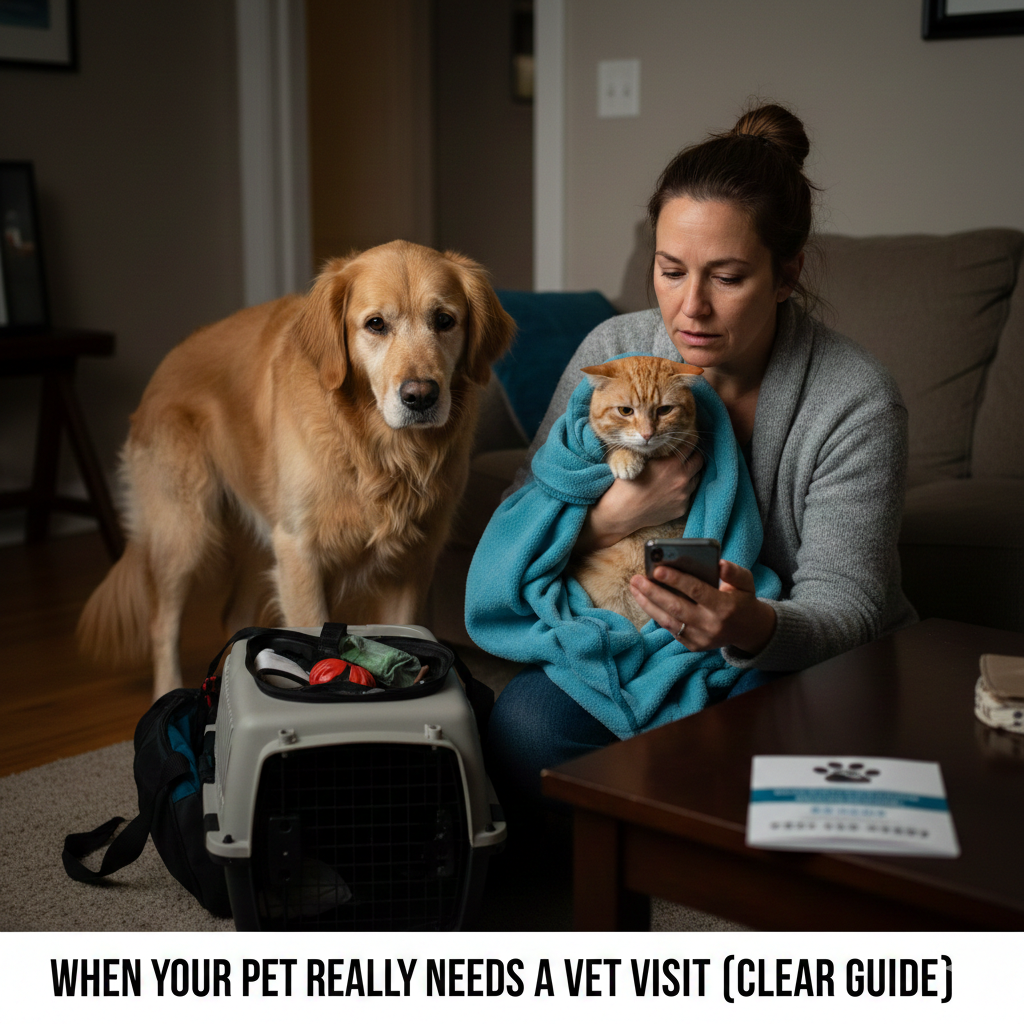
Your pet needs a vet visit when symptoms are persistent, worsening, sudden, or affecting basic functions like eating, breathing, movement, or awareness. The challenge for most owners isn’t caring too little—it’s knowing when observation becomes risky and professional help is the safer choice.When to take your pet to the vet depends on symptoms that are persistent, worsening, sudden, or affecting basic functions like eating, breathing, movement, or awareness. Knowing the right timing can prevent complications and reduce stress for both you and your pet.
Many owners struggle with this decision. Some wait too long, hoping issues will resolve on their own. Others panic over minor changes that could safely be monitored. This guide explains how to make that judgment calmly, using practical signals rather than fear or guesswork, so you can protect your pet without unnecessary stress or delays.
Why This Decision Is So Difficult for Owners when to take your pet to the vet
Unlike humans, pets can’t explain what hurts. Owners must interpret behavior, habits, and physical changes—often while second-guessing themselves.
Common reasons owners hesitate:
Fear of overreacting
Concern about cost
Conflicting online advice
From real-world experience, the most serious cases often start with reasonable doubt, not neglect. That’s why having a clear framework matters
The “Wait or Act” Decision Framework
Instead of guessing, use this simple structure.
-
Duration
Hours to 1 day: Often safe to monitor
3–5 days: Needs closer attention
Beyond 5 days: Vet visit strongly advised
-
Progression
Symptoms that worsen over time are more concerning than those that stay mild and stable.
-
Function
Any issue affecting:
Eating or drinking
Breathing
Walking or standing
Awareness or responsiveness
should never be ignored.
Symptoms That Should Never Wait
| Symptom | Why It’s Urgent |
| Labored breathing | Oxygen deprivation risk |
| Collapse or seizures | Neurological emergency |
| Sudden paralysis | Possible nerve or spinal issue |
| Continuous vomiting | Dehydration and organ stress |
| Severe lethargy | Systemic illness |
[Expert Warning]
If you’re debating whether something is “serious enough,” it usually means the situation already deserves professional input.
Signs That Can Be Monitored (With Limits)
Some issues are not emergencies—but still require attention.
Examples:
Mild appetite reduction (1–2 days)
Slight energy drop without pain
Occasional digestive upset
Important:
Monitoring does not mean ignoring. Set a clear time limit for reassessment.
Internal linking suggestion:
Link to Early Signs of Illness in Pets Most Owners Miss
Anchor: “subtle symptoms owners often overlook”
Common Owner Mistakes (and Safer Fixes)
Mistake 1: Waiting for Pain Signals
Pets often hide pain until it’s severe.
Fix:
Watch behavior changes, not just obvious pain.
Mistake 2: Comparing to Online Stories
Every pet is different.
Fix:
Use timelines and progression, not comparisons.
Mistake 3: Assuming Age Explains Everything
Not all decline is “normal aging.”
Fix:
Track changes month-to-month, not year-to-year.
Information Gain: Timing Matters More Than Severity
SERP Gap Identified:
Most articles list emergency symptoms but ignore timing.
From practical situations:
Mild symptoms addressed early often need simple treatment
The same symptoms ignored become complex and costly
Early visits don’t mean overreacting—they often mean less intervention, not more.
[Money-Saving Recommendation]
Addressing issues early usually reduces treatment cost and recovery time.
UNIQUE SECTION: Real-World Scenario
A pet showed reduced appetite and quiet behavior for several days. Because there was no visible pain, the owner waited. When mobility changes appeared, the issue had progressed significantly. Earlier evaluation would have meant simpler care and faster recovery.
The symptom wasn’t severe—the delay was.
How to Prepare for a Vet Visit (So It’s Worthwhile)
Before going:
Note symptom start time
Track behavior changes
Record food, water, and activity changes
Clear information helps vets diagnose faster and more accurately.
Natural transition sentence:
Many owners find it helpful to keep basic health records or tracking tools to make vet visits more efficient.
FAQs
How long should I wait before calling a vet?
If symptoms last more than a few days or worsen, call.
Are behavior changes enough to justify a visit?
Yes. Behavior often changes before physical symptoms.
Is it okay to monitor at home first?
Yes—if you set clear limits and reassess regularly.
What symptoms require emergency care?
Breathing issues, collapse, seizures, or sudden paralysis.
Can stress cause symptoms similar to illness?
Yes, but stress-related symptoms should still improve quickly.
Am I wasting a vet’s time with mild symptoms?
No. Early visits often prevent serious problems.
Conclusion:
Knowing when your pet really needs a vet visit isn’t about panic—it’s about judgment. By watching duration, progression, and function, you can make informed decisions that protect
Internal link
Seasonal Pet Health Care Tips for Every Weather
External link
https://www.alonereaders.com/article/details/2929/essential-daily-care-tips-for-a-happy-and-healthy-pet?


